

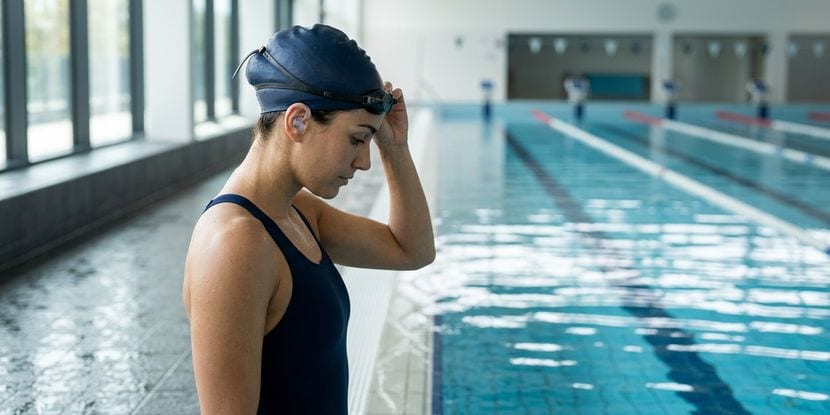
If you practice swimming, surfing, or any water sport, you probably already know that water and ears do not always get along. Moisture, chlorine from swimming pools, or salty seawater can damage conventional hearing devices and, in addition, increase the risk of infections if you do not use the proper protection. That is why it is worth choosing the right hearing aids for water sports.
Why are conventional hearing aids not suitable for water?
Regular hearing aids contain very delicate electronics, and that delicacy is precisely their weak point when it comes to water. As soon as some liquid gets into the circuit, it can cause corrosion, short circuits, and a loss of sound quality that is almost never repairable.
It is true that many current models are resistant to splashes, but that does not mean they can withstand immersion. If you try to protect a regular hearing aid with covers or accessories that are not designed for water, they will most likely not be of much use: sweat or moisture eventually gets into the microphones and, over time, the device ends up being damaged.
And it is not just a matter of electronics. When the ear remains damp after swimming or training, the risk of infections such as swimmer’s ear increases. So the issue is not only protecting the device, but also taking care of your hearing health.
Hearing aids for water sports
Having a hearing aid specifically designed for water allows you to continue training or competing without giving up good hearing or risking damage to your ears. These devices are made with materials and sealing systems capable of withstanding immersion, sweat, and constant contact with chlorine or salt, something that a conventional hearing aid simply cannot offer, no matter how durable it may seem.
In addition to protecting the electronic components, this type of solution helps prevent ear canal infections, something quite common among people who swim regularly or spend a lot of time at the beach or pool during the summer. They are also designed to stay securely in place during movement, so you do not have to worry about losing them while swimming or surfing.
Key requirements when choosing equipment for aquatic environments
Before deciding on a device, there are several technical aspects you should review to make sure it is truly prepared for water and not just for the occasional splash.
- IP68 certification: this is the minimum requirement if you are looking for a device that can withstand full immersion. Even so, it is worth carefully checking the manufacturer’s specifications, because not all IP68-rated devices can withstand the same depth or the same amount of time underwater.
- Physical sealing systems: the best devices include hydrophobic membranes in the microphones and a hermetic seal around the battery or charging port, so water has no way of getting inside.
- Biocompatible materials: the device must withstand both salty seawater and pool chlorine without deteriorating or irritating the skin of the ear canal, even if you use it frequently.
- Sports ergonomics: specific hooks or retention systems prevent the device from falling out during movement, something especially useful in higher-impact sports such as surfing.
Get the hearing aids for water sports that best suit your needs
Choosing the right hearing protection for water is not something that should be left to chance. Not all ears are the same, so the best option is to seek advice from a professional to find out which solution best suits you, whether it is a custom-made earplug or a more advanced device. At Centro Auditivo José Luis Domínguez, we are leaders when it comes to hearing aids in Málaga, so we carefully study your case to offer the solution that best fits your sporting lifestyle.
As a hearing centre in Málaga specialising in custom-made solutions, we manufacture and fit each device so that the seal is perfect and the experience is comfortable from day one. We guide you throughout the entire process, from the initial assessment to the final fitting, so that protecting your hearing does not depend on luck, but on sound professional judgement.
If you want to continue enjoying the water without putting your hearing health at risk, we encourage you to book a free hearing assessment at our centre.

Audiólogo y administrador del Centro Auditivo José Luis Domínguez. Formado en Audiología Protésica en el IES Santa Bárbara de Málaga, forma parte del equipo desde 2017.