


Tinnitus, or the perception of sounds without a clear external source, is a common experience that can significantly affect quality of life. Understanding its origin, especially when it is related to possible hearing loss, is the first step towards finding effective relief, and in many cases hearing aids for people with tinnitus become the most effective solution for restoring daily wellbeing.
Tinnitus: what it is and how it affects your hearing
Tinnitus, or the perception of internal sounds such as ringing, buzzing or hissing without an external source generating them, is a common manifestation of the auditory system. Often, a large proportion of people who experience this sound have some degree of hearing loss associated with it, even if they are not aware of it in their everyday activities. This perception of sound can arise at any time of day or in any circumstance, with the ringing sometimes becoming more intense, for example in quiet environments, during periods of stress or at the end of your working day.
When the inner ear has difficulty receiving certain sounds from the environment, the brain compensates for this lack of stimulation by increasing its activity, which the nervous system eventually interprets as the characteristic tinnitus ringing. Understanding this phenomenon is essential: it is not a disease in itself, but rather a signal from the auditory system indicating a difficulty in processing sound. When addressing tinnitus from an auditory health perspective, the aim is not to look for magical solutions, but to manage the intensity of this sound in order to reduce its impact on wellbeing and daily communication.
How do hearing aids for people with tinnitus help?
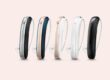
Hearing aids for tinnitus do not act as a cure, but rather as a management tool through sound therapy and amplification. By amplifying the sounds in the environment that the user was no longer able to perceive, the brain once again receives real auditory stimuli, reducing the sensory gap that causes neural hyperactivity. This process, supported by masking functions, allows the user to ‘defocus’ from the ringing, facilitating a phenomenon known as habituation, where the brain gradually learns to ignore the internal signal.
For tinnitus management to be effective, the devices must offer a high level of personalisation and precision. It is essential to have hearing aids that allow fine adjustment of high frequencies, where tinnitus often occurs, and that incorporate white noise or customisable relaxation sound programmes. Likewise, Bluetooth connectivity has become a key feature, as it allows the user to stream specific sounds directly to the hearing aids – such as soft music or rain sounds—from their phone, integrating this management into their daily routine in a discreet and simple way.
The professional fitting process for the device
The effectiveness of hearing aids for tinnitus depends to a great extent on a professional audiological fitting process, away from direct purchases or purchases without technical supervision. This process begins with a thorough audiological assessment, where a specialist analyses the type of hearing loss, the nature of the tinnitus and the patient’s specific hearing needs. In addition, a tinnitus test can be used, a clinical test capable of classifying the frequency and volume of the tinnitus. No two cases of tinnitus are the same, so the programming of the devices must be fully individualised.
The fitting process is progressive. During the first few weeks, the audiologist carries out close follow-up, adjusting the amplification levels and the balance of the maskers to ensure that the device is not only comfortable, but also provides the expected relief without causing auditory fatigue. Patience is a vital component at this stage, as the auditory system and the brain need time to reorganise and become accustomed to the new input of sound processed in an optimal way.
Furthermore, relief from tinnitus is rarely immediate and usually requires several periodic adjustments to reach the right balance. During follow-up appointments, the specialist audiologist refines the hearing aid settings based on the patient’s real feedback about how they perceive background noise and environmental sound. This ongoing technical work is what truly allows the hearing aid to become an effective long-term solution, adapting to changes in hearing status and the user’s preferences.
Professional assessment in Málaga for hearing aids for people with tinnitus
Restoring auditory wellbeing is possible with the right support. At Audífonos Domínguez, we do this with a combination of personal attention and technical expertise. We understand that every case is different and requires an approach that is both personal and technical, which is why we provide complete personalisation in every fitting, supported by the most advanced technology on the market so that hearing solutions integrate naturally into each patient’s daily life.
If you are looking for professional guidance on how to treat tinnitus, we invite you to request a free hearing assessment at our hearing centre in Málaga. Our team of specialist audiologists will carry out a thorough assessment of your hearing to determine whether hearing technology can provide the relief and improvement in quality of life you need, always with continuous and personalised follow-up throughout the process.
Managing tinnitus is a journey that requires patience and, above all, a professional approach. There is no universal solution, but there are advanced technological tools which, combined with an individualised assessment, can significantly reduce the impact of tinnitus on your daily life. Contact us and book an appointment for a professional assessment.