

Have you ever wondered why some sounds are easy to hear and others we cannot detect? That barrier that marks the limit between what you hear and what you don’t is known as the hearing threshold.
It is a fundamental concept for understanding how your ear works and why it is so important to take care of it. We’ll tell you all about it in this article!
Hearing threshold
The hearing threshold, measured in decibels (dB), represents the lowest volume at which a particular person can hear a sound. To give you an idea, a healthy ear can detect sounds from 0 dB. However, this threshold varies depending on the frequency of the sound, i.e. whether it is low or high pitched. This is why it is sometimes easier to hear a low-pitched sound than a high-pitched one, even if they are both at the same volume.
Measuring this threshold is key to diagnosing and assessing the health of your hearing. A high hearing threshold indicates that you need a louder sound to be able to hear it, which could be a sign of hearing loss. That is why, during check-ups, specialists focus on finding the exact point at which the person begins to hear different tones. This gives us a very accurate map of the sensitivity of their ears. The aim is not only to find out if you can hear, but also at what volume and frequency you can hear, which is essential for understanding the nature of any hearing problem.
How is this threshold measured?
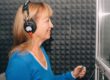
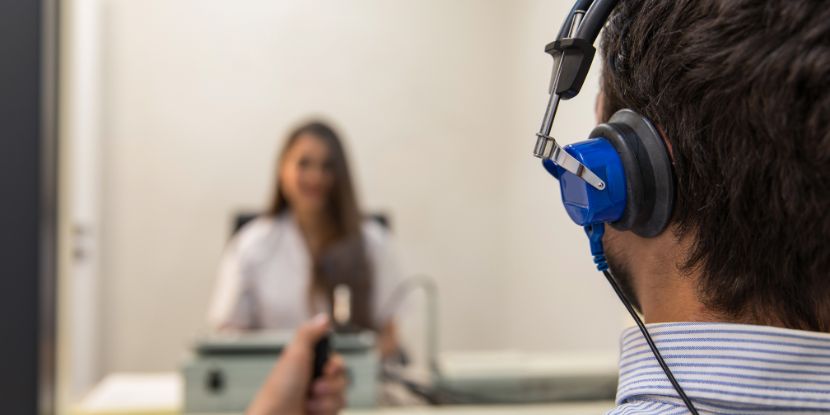
To measure your hearing threshold, a test called pure tone audiometry is performed. It is a simple and painless test. During the test, you wear headphones and are asked to indicate each time you hear a sound. These sounds are tones emitted at different frequencies and intensities.
The audiologist adjusts the volume until they find the point where you can barely hear the sound. The result is recorded on a graph called an audiogram, which shows your threshold in decibels for each frequency measured. This graph is an essential tool that allows the professional to objectively assess your hearing ability.
Factors affecting your hearing threshold
Your hearing threshold is not static and can be affected by several factors throughout your life. Knowing what these are helps you understand why your hearing changes and take steps to protect it.
Age
The most common factor affecting hearing threshold is age. As we get older, the cells in the inner ear responsible for picking up sound wear out. This process, known as presbycusis, causes the hearing threshold to rise, especially for high-frequency sounds. It is a natural process, but its pace can be accelerated by other factors.
Noise exposure
Constant exposure to loud noises is one of the main causes of hearing loss. Working in noisy environments, listening to music at high volumes, or attending concerts without protection can irreversibly damage the cells in the inner ear. A single exposure to extremely loud noise, such as an explosion, can also cause significant damage and suddenly raise your hearing threshold.
Diseases and medications
Certain diseases such as otosclerosis, as well as ear infections, can directly affect your hearing threshold. Similarly, some medications can have adverse effects on the inner ear, causing an increase in hearing threshold or even tinnitus (ringing in the ears). It is always important to consult a doctor about the possible side effects of treatments.
We measure your hearing threshold
If you feel that you don’t hear as well as you used to, if you have to turn up the volume on the television, or if you often ask people to repeat what they say, your hearing threshold may have changed. The best way to confirm this is to have a complete hearing test.
At our hearing centre, Audífonos Domínguez, our team of specialist audiologists is at your disposal to perform a complete audiometry test. Through this simple examination, we can accurately determine your hearing threshold at different frequencies and, if necessary, offer you a personalised solution so that you can once again enjoy all the sounds of life.
Contact us to hear better!